
ComparisonsEvergreen research · not a news report
PDRN vs Retinol: Which Is Better for Your Skin?
A plain-English answer: what retinol and PDRN each do, how strong the evidence is, and whether you can use them together.
Editorial research review ·Written by Korean PDRN Editorial Team· Reviewed by Khalid Anwar, Clinical Pharmacist, UK (GPhC 2219283)· Reviewed 13 Oct 2026· Updated 11 Nov 2026
On this page · 8 sections
Short answer: for visible signs of sun-related ageing — fine lines, rough texture and uneven tone — retinol has far stronger evidence than PDRN. PDRN is a newer cosmetic ingredient mostly used for hydration and a smoother-looking surface, and evidence for leave-on PDRN products is still early and formula-specific. They are not substitutes: many people choose retinol as the main "active" and use a gentle, hydrating PDRN product as support — if their skin tolerates both.
PDRN vs Retinol: Which Is Better for Your Skin?
It depends on what you want:
- You want to improve fine lines and texture over months: retinol (or another retinoid) is the better-evidenced choice. Expect a settling-in period with possible dryness or peeling.
- You want comfortable hydration without irritation risk from an active: a PDRN serum, toner or cream is a reasonable choice, but judge it as a hydrating product, not an anti-ageing treatment.
- You are pregnant, trying to conceive or breastfeeding: avoid retinoids unless a doctor or pharmacist advises otherwise. Data on topical PDRN in pregnancy is also limited — check with a healthcare professional.
- Your skin is very sensitive or your barrier feels damaged: pause strong actives first. A simple routine with a moisturiser and sunscreen comes before either ingredient.
Key differences at a glance
| Retinol | PDRN (topical cosmetic) | |
|---|---|---|
| What it is | A form of vitamin A | A mixture of DNA fragments, usually salmon-derived; "plant PDRN" is a different, plant-derived material |
| Main use | Visible signs of photoageing: fine lines, texture, tone | Hydration and a smoother-looking surface |
| Strength of evidence | Long research history for retinoids in photoageing | Early; strongest data is for injections and wound care, not leave-on products |
| Common side effects | Dryness, peeling, redness, sun sensitivity, especially at first | Usually marketed as gentle; reactions depend on the full formula |
| Pregnancy | Prescription topical retinoids must not be used in pregnancy (UK regulator); many advise caution with cosmetic retinol too | Limited data — ask a healthcare professional |
| Time to judge | Usually months of consistent use | Hydration effects are from the whole formula and can be immediate; no established timeline for anything more |
| Time of day | Usually evening, with daily sunscreen | Morning or evening |
How retinol works
Retinol is converted in the skin to retinoic acid, which acts on retinoid receptors and changes how skin cells behave. Retinoids are among the best-studied topical ingredients for photoageing. The trade-off is irritation, particularly when starting — the American Academy of Dermatology suggests introducing retinol gradually and using sunscreen daily. Prescription retinoids (such as tretinoin) are stronger than cosmetic retinol. See our retinoids guide for the differences.
How PDRN works — and what we do not know
PDRN (polydeoxyribonucleotide) has been studied mainly as an injected or wound-care treatment, where it is thought to act partly through adenosine A2A receptor signalling. Whether, and how much, PDRN reaches active layers of skin from a cream or serum depends on molecular size and the formula. One 2026 study of a specific medium-length topical PDRN formula reported short-term improvements, but it covers that one formula only. Results from clinic injections or wound healing cannot be applied to skincare you put on at home. Read more in our PDRN explainer.
Can you use PDRN and retinol together?
There is little research on combining them. A practical approach many people use:
- Introduce retinol on its own first, two or three evenings a week.
- Use a simple hydrating product — which could be a PDRN serum or cream — on the same nights or alternate nights if your skin feels dry.
- Add only one new product at a time, so you can tell what causes any irritation.
- Use broad-spectrum sunscreen every morning.
If you get persistent redness, stinging or peeling, stop and speak to a pharmacist.
For a step-by-step way to fit both into one routine, see is PDRN retinol? Using both together.
What about peptides and hyaluronic acid?
- Hyaluronic acid is a humectant: it holds water at the skin surface. Reviews suggest topical forms can improve hydration; it is often found alongside PDRN in Korean formulas.
- Peptides are short chains of amino acids marketed for firmer-looking skin. Evidence varies widely by peptide and is generally less robust than for retinoids.
Neither is a replacement for retinol for photoageing, and neither is a "competitor" to PDRN — they are frequently combined in the same product.
Products to consider
If you have decided a PDRN product fits your routine, compare formulas in our PDRN cream and toner guide, our PDRN serum buying guide and the wider best PDRN skincare UK comparison. Cosmetic PDRN is not equivalent to clinic polynucleotide treatments — see PDRN skincare vs salmon DNA facials.
Frequently asked questions
Is PDRN better than retinol?
Not for photoageing — retinol has much stronger evidence. PDRN may suit people who want a gentle, hydrating product, but it is not an evidence-equivalent replacement.
Can I use PDRN instead of retinol if retinol irritates me?
You can use PDRN for hydration, but don't expect retinol-like results. Alternatives for retinol-sensitive skin include lower strengths, less frequent use or other retinoids — a pharmacist or dermatologist can advise.
Can I use PDRN and retinol in the same routine?
Many people do, but combinations are not well studied. Introduce one new product at a time, use sunscreen daily and stop if irritation persists.
Is retinol safe in pregnancy?
The UK medicines regulator says prescription topical retinoids must not be used in pregnancy or by those planning a pregnancy. Ask a pharmacist or doctor before using cosmetic retinol while pregnant or breastfeeding.
PDRN vs retinal: is the answer different?
No. Retinal (retinaldehyde) is a retinoid, like retinol, and it also has to be converted in the skin before it acts. The comparison with PDRN is the same: retinoids have much stronger evidence for lines and texture, and PDRN is not a retinoid and is not an evidence-equivalent replacement. If you are pregnant, planning a pregnancy or breastfeeding, ask a pharmacist or doctor before using retinal, as with retinol. Our retinoids guide explains how retinol, retinal and prescription retinoids differ.
In summary
Retinol is the better-evidenced ingredient for fine lines and texture; PDRN is an early-evidence ingredient best judged as part of a hydrating formula. Choose based on your goal and how your skin tolerates actives — and treat any claim that a PDRN cream works like a clinic treatment with caution.
Sources
- American Academy of Dermatology. Retinoid or retinol? — how retinoids differ and how to start using them.
- MHRA. Retinoids: pregnancy prevention and topical retinoid contraindication (2019) — UK regulator advice on retinoids in pregnancy.
- Marques C, et al. From PDRNs to PNs: scientific definitions, molecular insights and clinical applications. Biomolecules, 2025.
- Colangelo MT, Galli C, Guizzardi S. The effects of polydeoxyribonucleotide on wound healing and tissue regeneration: a systematic review of the literature. Regenerative Medicine, 2020. DOI: 10.2217/rme-2019-0118. The review covers wound care.
- Ye R, et al. Topical medium-length PDRN in photodamaged skin. PLoS One, 2026 — one proprietary formula.
- Bravo B, et al. Benefits of topical hyaluronic acid for skin quality and signs of ageing. Dermatol Ther, 2022.
- Gorouhi F, Maibach HI. Role of topical peptides in preventing or treating aged skin. Int J Cosmet Sci, 2009.
Compare the products in this article
Researched from catalogue and manufacturer information — not hands-on tested. Prices and stock change; check the retailer before buying.
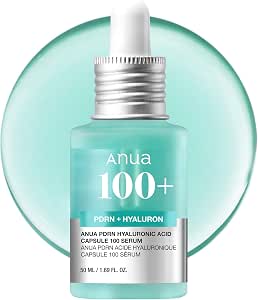
Anua · Serums
PDRN Hyaluronic Acid Capsule 100 SerumMay suit: Lightweight hydration and a dewy finish
Less suited to: Vegan users; people avoiding fish-derived ingredients; anyone sensitive to niacinamide or complex botanical extracts; users wanting a simple single-ingredient serum.
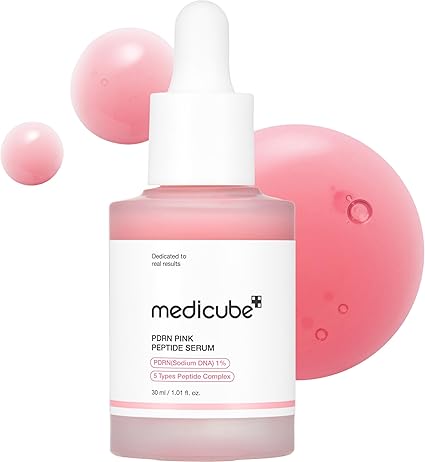
medicube · Serums
Salmon DNA PDRN Pink Peptide SerumMay suit: Hydration, glow and firmer-looking skin
Less suited to: Vegan users; people avoiding fish-derived ingredients or with fish-product sensitivity; fragrance-sensitive users; very clog-prone skin that reacts to isopropyl myristate.
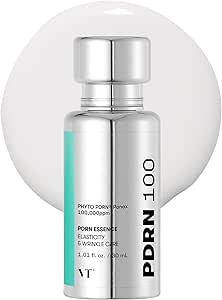
VT COSMETICS · Essences
PDRN 100 EssenceMay suit: Vegan PDRN users seeking hydration and glow
Less suited to: Very oily or highly clog-prone skin that reacts to isopropyl myristate or richer emollients; users wanting a nearly weightless serum; anyone sensitive to ginseng or niacinamide.
Get new PDRN research by email
One email a week with new guides and evidence updates. No spam; unsubscribe anytime.
Linked source records
- Gorouhi F, Maibach HI. Role of topical peptides in preventing or treating aged skin. 2009 (Tier 1, PubMed, retrieved 30/07/2026)
- American Academy of Dermatology. Retinoid or retinol? (Tier 2, American Academy of Dermatology, retrieved 30/07/2026)
- MHRA. Retinoids: pregnancy prevention and topical-retinoid contraindication. 2019 (Tier 1, assets.publishing.service.gov.uk, retrieved 30/07/2026)
- Marques C, et al. From PDRNs to PNs: scientific definitions, molecular insights and clinical applications. 2025 (Tier 1, PubMed, retrieved 30/07/2026)
- Colangelo MT, Galli C, Guizzardi S. The effects of polydeoxyribonucleotide on wound healing and tissue regeneration: a systematic review of the literature. Regenerative Medicine, 2020. DOI: 10.2217/rme-2019-0118. (Tier 1, PubMed, retrieved 30/07/2026)
- Bravo B, et al. Benefits of topical hyaluronic acid for skin quality and signs of ageing. Dermatol Ther. 2022 (Tier 1, PubMed, retrieved 30/07/2026)
- Ye et al.. Topical medium-length PDRN in photodamaged skin: laboratory and short clinical study (2026) (Tier 1, PubMed, retrieved 30/07/2026)
Something not right? Request a correction. Read our editorial policy and review methodology.