
GuidesEvergreen research · not a news report
Niacinamide
A practical guide to vitamin B3 in skincare: barrier support, uneven
Written by Korean PDRN Editorial Team· Updated 8 Nov 2026
Compare the products in this article
Researched from catalogue and manufacturer information — not hands-on tested. Prices and stock change; check the retailer before buying.
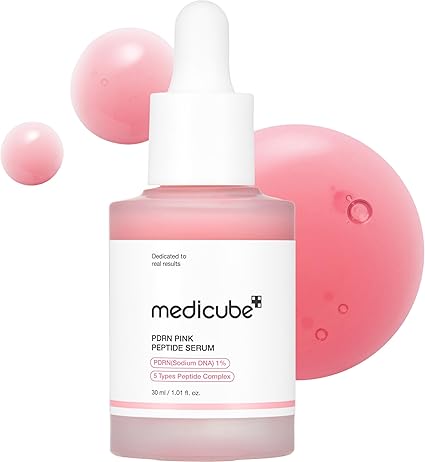
medicube · Serums
Salmon DNA PDRN Pink Peptide SerumMay suit: Hydration, glow and firmer-looking skin
Less suited to: Vegan users; people avoiding fish-derived ingredients or with fish-product sensitivity; fragrance-sensitive users; very clog-prone skin that reacts to isopropyl myristate.
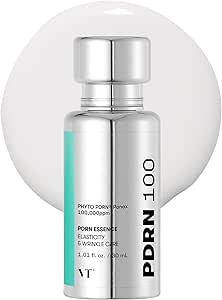
VT COSMETICS · Essences
PDRN 100 EssenceMay suit: Vegan PDRN users seeking hydration and glow
Less suited to: Very oily or highly clog-prone skin that reacts to isopropyl myristate or richer emollients; users wanting a nearly weightless serum; anyone sensitive to ginseng or niacinamide.
On this page · 11 sections
tone, oiliness, concentrations, combinations and realistic expectations.
QUICK ANSWER Niacinamide is a well-tolerated form of vitamin B3 used in moisturisers, serums and toners. Clinical and mechanistic evidence supports benefits for barrier function, uneven-looking tone, redness and some signs of ageing, particularly in well-formulated products around 2-5%. Higher percentages are not automatically more effective and may be more irritating.
| Evidence rating | Moderate for several cosmetic outcomes; formulation-specific |
|---|---|
| Best suited to | Most skin types, especially uneven tone, oiliness, mild redness or a weakened barrier |
| Main limitation | Many studies use complete formulas or ingredient combinations, making the independent effect difficult to isolate |
| Last reviewed | 30 July 2026 |
Independent educational content. No product is recommended solely because it contains a fashionable ingredient.
What is niacinamide?
Niacinamide, also called nicotinamide, is the amide form of vitamin B3. In skin cells it contributes to the production of NAD and NADP, cofactors involved in cellular energy, antioxidant defence and repair processes. It is water-soluble and is widely used in leave-on skincare because it is generally stable and compatible with many formula types. [1]
Niacinamide is not the same as niacin, the form associated with flushing when taken or used inappropriately. Cosmetic niacinamide is usually selected because it can support multiple skin functions without the irritation profile of stronger acids or retinoids.
Benefits depend on the concentration, vehicle and the rest of the formula. A balanced 4-5% product may outperform a poorly formulated 10-20% serum, especially for sensitive skin.
How it may affect the skin
Niacinamide may increase synthesis of epidermal lipids and proteins involved in barrier function, reduce transfer of pigment-containing melanosomes from melanocytes to keratinocytes, and modulate inflammatory and oxidative pathways. [1,2]
Clinical studies have reported improvements in hyperpigmented spots, red blotchiness, texture and fine lines with regular topical use. Several studies used approximately 4-5% niacinamide, and some combined it with other ingredients, so benefits should not be attributed to concentration alone. [2,3]
For oily skin, niacinamide may help improve the appearance of shine or sebum balance in some users, but it is not a guaranteed treatment for acne and does not replace retinoids, benzoyl peroxide or other evidence-based acne options when these are clinically indicated.
What the evidence supports - and what it does not
| Claim | Evidence assessment | Practical interpretation |
|---|---|---|
| Barrier support | Moderate | Useful within moisturisers for dry, irritated or over-treated skin. |
| Uneven tone / post-blemish marks | Moderate | Can support gradual improvement, especially alongside daily sunscreen. |
| Oiliness and visible pores | Limited-to-moderate | May reduce shine in some users; pore size cannot be permanently changed. |
| Fine lines and texture | Moderate but often formula-combination data | Expect gradual cosmetic improvement rather than a retinoid-level effect. |
| Active acne treatment | Supportive, not first-line alone | May complement a routine but is not sufficient for moderate or severe acne. |
Who may find it useful
-
Combination or oily skin seeking a multi-purpose, non-exfoliating active.
-
Uneven-looking tone and post-blemish marks, always paired with sunscreen.
-
Dry or sensitive skin when included at a moderate level in a barrier-supporting moisturiser.
-
Beginners who want one versatile active rather than several strong products.
Who should be cautious
-
High-percentage serums may sting, flush or irritate even though niacinamide is generally well tolerated.
-
Do not assume that 10-20% is necessary; 2-5% has meaningful clinical precedent.
-
A reaction may come from the formula’s solvents, fragrance or preservatives rather than niacinamide itself.
-
Persistent facial flushing, burning or rash requires stopping the product and considering professional assessment.
How to use it in a routine
| When | Recommended placement | How to introduce it |
|---|---|---|
| Morning | After cleansing and before moisturiser/sunscreen, or use a moisturiser that already contains niacinamide | Start once daily. A 2-5% product is a sensible entry point. |
| Evening | After cleansing; before or within moisturiser | May be used on non-retinoid nights initially if skin is reactive. |
| Acne-prone skin | Use as a supporting serum or moisturiser, not as the sole acne treatment | Introduce one active at a time and avoid stacking several 10% serums. |
Ingredient pairing guide
| Usually compatible | Use thoughtfully or seek advice |
|---|---|
| • Hyaluronic acid and glycerin; • Ceramides, panthenol and centella; • Vitamin C in a stable, tolerable routine; • Retinoids, when introduced gradually; • Tranexamic acid for a pigmentation-focused routine | • Several strong actives in one session if the skin barrier is already irritated; • Very high-percentage formulas marketed as automatically superior; • Products containing fragrance or multiple botanical extracts if skin is reactive |
How to choose a well-formulated product
-
For most users, begin around 2-5%; judge tolerance and results before considering a higher level.
-
Choose a complete formula suited to your skin type - a light serum for oilier skin or a moisturiser for dry skin.
-
Look for opaque or air-limiting packaging and a current ingredient list.
-
Avoid buying solely on “pore shrinking” or instant brightening claims.
-
Use daily sunscreen if pigmentation is the main concern.
Common myths and mistakes
Myth: Niacinamide and vitamin C can never be used together.
Reality: Modern, well-formulated products can usually be combined. The main issue is individual irritation, not an automatic chemical incompatibility.
Myth: Ten per cent is the minimum effective concentration.
Reality: Clinical evidence exists at lower concentrations, including around 2-5%. More is not necessarily better.
Myth: Niacinamide permanently closes pores.
Reality: Pores do not open and close like doors. Reduced oiliness and smoother texture may make them look less noticeable.
Myth: Niacinamide cures acne.
Reality: It may support an acne routine, but persistent inflammatory or scarring acne needs evidence-based treatment and sometimes medical assessment.
Frequently asked questions
Can niacinamide be used every day?
Yes, many people use it daily. Start once daily or every other day if sensitive, then increase according to tolerance.
Is niacinamide suitable for dry skin?
Yes, especially within a moisturiser containing humectants and barrier lipids. A drying, solvent-heavy serum may be less suitable.
How long before niacinamide improves pigmentation?
Studies generally assess regular use over weeks rather than days. Daily sunscreen is essential because ongoing ultraviolet and visible-light exposure can undermine progress.
Why does niacinamide make my skin sting?
The percentage may be unnecessarily high, the barrier may already be impaired, or another ingredient may be responsible. Stop and simplify the routine if irritation persists.
Can niacinamide be used with PDRN?
Yes. No harmful interaction is known, and the two are often sold together: more than half of the PDRN products in our catalogue also list niacinamide in their ingredients, including the Medicube Salmon DNA PDRN Pink Peptide Serum, the COSRX 5 PDRN B5 Vital Soothing Toner and the VT Cosmetics PDRN 100 Essence. Evidence for the pairing is limited: the only studies we found tested a mixture of PDRN, niacinamide and vitamin C on animal skin exposed to UV-B light, not on people [5, 6]. See our PDRN ingredient page for what PDRN is.
My PDRN product already contains niacinamide. Do I need a separate niacinamide serum?
Not necessarily. UK ingredient lists name ingredients above 1% in descending order of weight [7], so niacinamide near the top of the list suggests a meaningful amount, but most brands do not state the percentage. Adding a separate niacinamide serum raises the total you apply, and a higher percentage can make stinging or flushing more likely without a clear extra benefit. If you want both, introduce the second product slowly and stop if your skin feels warm or irritated.
Evidence sources
1. Camillo L, et al. Nicotinamide: A Multifaceted Molecule in Skin Health and Beyond. Medicina. 2025. Open source
2. Bissett DL, et al. Topical niacinamide reduces signs of ageing facial skin. 2008. Open source
3. Hakozaki T, et al. Niacinamide reduces cutaneous pigmentation and melanosome transfer. 2002. Open source
4. Boo YC. Mechanistic basis and clinical evidence for nicotinamide in skin ageing and pigmentation. 2021. Open source
5. Kim HM, et al. A mixture of topical forms of polydeoxyribonucleotide, vitamin C, and niacinamide attenuated skin pigmentation and increased skin elasticity by modulating nuclear factor erythroid 2-like 2. Molecules. 2022. Animal study. Open source
6. Park HJ, et al. The combination of niacinamide, vitamin C, and PDRN mitigates melanogenesis by modulating nicotinamide nucleotide transhydrogenase. Molecules. 2022. Animal and cell study. Open source
7. Regulation (EC) No 1223/2009 on cosmetic products, Article 19 (as retained in UK law). Open source
Editorial and medical disclaimer This guide is educational and is not a diagnosis or individual medical advice. Cosmetic ingredients cannot replace appropriate assessment or treatment for persistent acne, dermatitis, infection, sudden pigment change or another skin condition. Introduce one new product at a time, follow the product directions, and stop if significant irritation develops. Seek professional advice for severe, painful, scarring, rapidly changing or treatment-resistant symptoms.
Get new PDRN research by email
One email a week with new guides and evidence updates. No spam; unsubscribe anytime.
Sources
- Camillo L, et al. Nicotinamide: A Multifaceted Molecule in Skin Health and Beyond. Medicina. 2025 (Tier 1, PubMed, retrieved 30/07/2026)
- Bissett DL, et al. Topical niacinamide reduces signs of ageing facial skin. 2008 (Tier 1, PubMed, retrieved 30/07/2026)
- Boo YC. Mechanistic basis and clinical evidence for nicotinamide in skin ageing and pigmentation. 2021 (Tier 1, PubMed, retrieved 30/07/2026)
- Hakozaki T, et al. Niacinamide reduces cutaneous pigmentation and melanosome transfer. 2002 (Tier 1, PubMed, retrieved 30/07/2026)
Something not right? Request a correction. Read our editorial policy and review methodology.