
GuidesEvergreen research · not a news report
Ectoin Skincare: What It Does, What the Evidence Shows, and the Korean Formulas Worth Knowing
Editorial research review ·Written by Korean PDRN Editorial Team· Reviewed by Khalid Anwar, Clinical Pharmacist, UK (GPhC 2219283)· Reviewed 30 Oct 2026· Updated 30 Oct 2026
Compare the products in this article
Researched from catalogue and manufacturer information — not hands-on tested. Prices and stock change; check the retailer before buying.
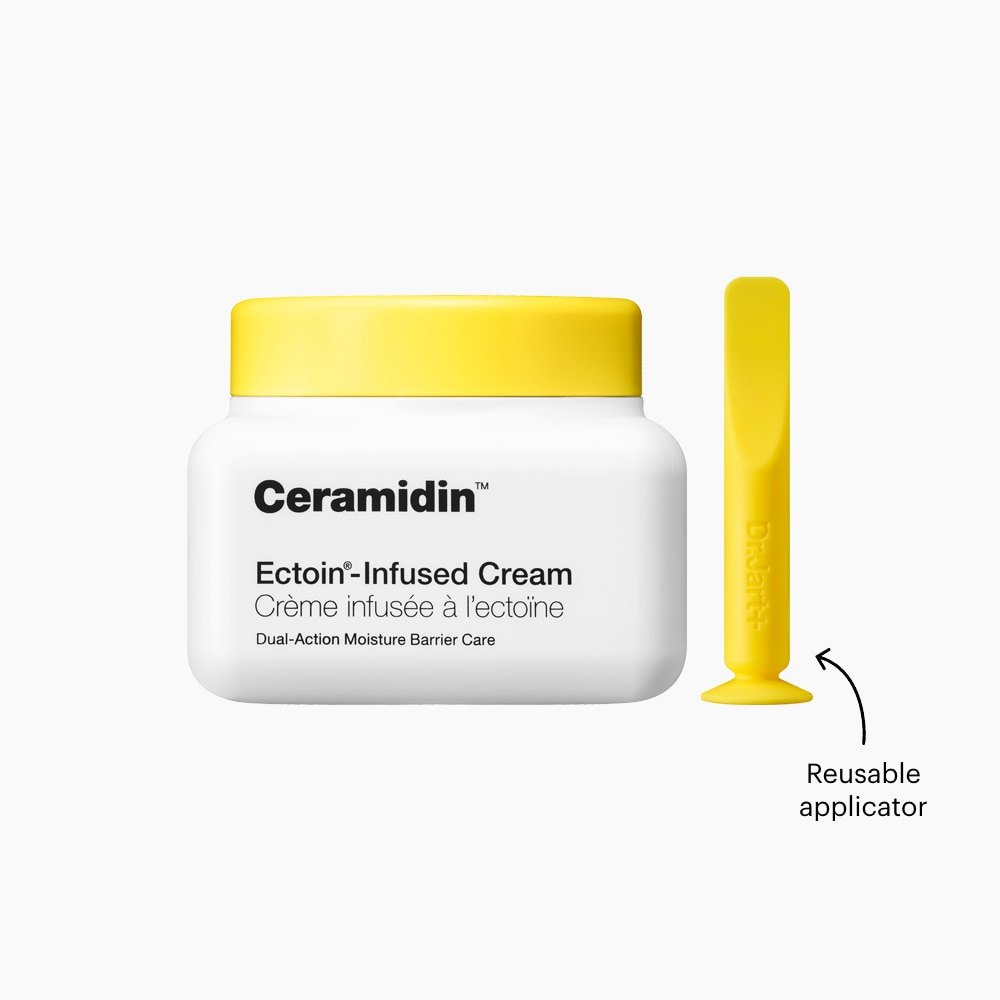
Dr.Jart+ · Creams
Ceramidin Ectoin-Infused CreamMay suit: Dry, tight-feeling skin that tolerates essential oils.
Less suited to: Fragrance-sensitive or reactive skin, and oily skin that dislikes rich creams.
On this page · 16 sections
Quick answer
Ectoin is a small water-binding molecule made by bacteria that survive salt lakes, deserts and intense sun. In skincare it works as a protective humectant: it holds water at the skin surface and helps a stressed barrier feel more comfortable. Specific ectoin creams have improved dryness and barrier-related symptoms in trials, but results depend on the whole formula.
Much of the human evidence concerns 5.5–7% ectoin creams used for atopic-dermatitis symptoms; one vehicle-controlled paediatric study evaluated a combined 1% ectoin + 0.1% hyaluronic acid cream. These trial results cannot be assumed to apply to an over-the-counter Korean ectoin serum at an undisclosed concentration.
In this guide
- What is ectoin?
- How ectoin works on skin
- What the evidence shows
- Ectoin vs hyaluronic acid vs ceramides
- What the trials cannot tell us
- Ectoin vs PDRN
- Using ectoin with retinol, acids and vitamin C
- Korean ectoin products to know
- A practical morning and evening routine
- How to choose an ectoin product
- Who ectoin suits, and who should be cautious
- Frequently asked questions
- Buying and claim-verification checklist for UK readers
- References
What is ectoin?
Ectoin (INCI: Ectoin; chemical name a cyclic tetrahydropyrimidine) is an "extremolyte". Halophilic bacteria produce it to stop their cells drying out in water-starved, high-salt environments. Cosmetic ectoin is made by fermentation, so it is not animal-derived and is usually suitable for vegan formulas.
The molecule is small and highly water-loving. Instead of sitting as a film like petrolatum, it organises water molecules around itself and around cell membranes and proteins. Researchers describe a water-association mechanism, sometimes termed a “hydrocomplex”; this is a proposed explanation, not by itself proof of clinical outcomes.
How ectoin works on skin
- Holds water where the barrier is weak. Ectoin binds and structures surface water, which is why it appears in emollients for very dry and eczema-prone skin.
- Reduces water loss. Some studies report improved barrier-related measures, including transepidermal water loss (TEWL); results are not consistent proof that every ectoin formula reduces TEWL.
- Calms stress-driven irritation. Lab and clinical data suggest ectoin reduces inflammatory signalling triggered by dryness, UV and pollution. Some users may notice less tightness, but personal response depends on the whole formula.
- Stabilises membranes. This is the same mechanism that lets ectoin be used in eye drops and nasal sprays for dry, irritated membranes.
Ectoin is not an exfoliant, a retinoid or a collagen stimulator. It does not resurface skin or fade pigmentation. Its job is protection and comfort, which makes it a supporting ingredient in most routines.
What the evidence shows
All of the trials below used creams formulated as emollients or medical devices, not typical cosmetic serums. They show what particular ectoin creams achieved in specific groups of people, not what any ectoin serum will do.
| Study | Who | Ectoin product | Main finding |
|---|---|---|---|
| Marini et al., 2014, Skin Pharmacol Physiol | 65 adults, mild–moderate atopic eczema; randomised, double-blind, split-body | Ectoine cream, twice daily for 28 days | As effective as a non-steroidal barrier cream comparator; very well tolerated |
| Alexopoulos et al., 2023, Pediatr Dermatol | 70 children aged 2–18, mild–moderate eczema; randomised, vehicle-controlled | 1% ectoine + 0.1% hyaluronic acid cream for 4 weeks | Clearly better than the base cream on SCORAD and itch; mild skin reactions in 23.5% vs 5.7% |
| Hon et al., 2019, Curr Pediatr Rev | 30 children with moderate–severe eczema; open-label | Ectoin-containing emollient for 4 weeks | SCORAD and TEWL improved; some reported tingling on broken skin |
| Abd Elazim et al., 2023, Dermatitis | 50 women having breast radiotherapy; randomised, double-blind | 7% ectoin cream vs 5% dexpanthenol | Lower dermatitis grade, pain and itch at week 2 with ectoin |
| Kauth & Trusova, 2022, Dermatol Ther | Systematic review of 6 studies | 5.5–7% ectoine formulas | Improved dryness and itch in eczema; matched dexpanthenol for isotretinoin dryness |
Our reading of the evidence: the data are consistent but small, short (four weeks or so) and partly industry-funded. The review authors include an employee of the main ectoine manufacturer. Nobody has tested ectoin as an anti-ageing active in a well-designed long-term trial. Any "firming" or "lifting" claim on an ectoin product rests on the other ingredients or on unpublished brand testing.
Ectoin is also well studied outside skincare. A review published online in 2025 in Drug Delivery and Translational Research covers its use in nasal sprays and eye drops (Ferreira et al.), which supports its reputation for good tolerability on delicate tissue.
If you have eczema: ordinary cosmetics should not be marketed as treatments for a skin disease. Keep using the emollients and treatments your GP or pharmacist recommends. Ectoin products can sit alongside them if they suit your skin.
Ectoin vs hyaluronic acid vs ceramides
These three are partners, not rivals. A barrier-repair routine works best when it has a humectant, a lipid and a protector.
| Ectoin | Hyaluronic acid | Ceramides | |
|---|---|---|---|
| Type | Protective humectant (extremolyte) | Humectant | Barrier lipid |
| What it does | Structures surface water, reduces water loss, calms stress-driven irritation | Draws and holds water in the upper skin | Rebuilds the lipid "mortar" between skin cells |
| Best for | Sensitive, reactive, retinoid-dry, pollution-exposed skin | Dehydrated skin of any type | Dry, eczema-prone, over-exfoliated skin |
| Weak spot | Little independent anti-ageing data | Can feel tight in very dry air without an occlusive on top | Needs cholesterol and fatty acids for best results |
| Clinical strength | Studied concentrations vary by formulation and indication | Variable; no universal efficacy threshold | Varies; ratio matters more than % |
Sephora UK's 2026 trend guide makes the same split: ectoin for sensitive-skin comfort, PDRN for glow. For more on lipids, read our ceramides and barrier repair guide, and for humectants, our hyaluronic acid explainer.
What the trials cannot tell us
Ectoin is a useful example of why ingredient marketing and product-level evidence must be separated. The 2022 systematic review identified six eligible clinical studies of ectoin-containing formulations for inflammatory skin conditions. Five concerned atopic dermatitis and one concerned retinoid-related dermatitis; these were not all blinded, large or independent. A subsequent controlled paediatric study tested ectoin together with hyaluronic acid, so its positive outcome cannot be assigned to ectoin alone. The paediatric trial also recorded more mild cutaneous reactions in the active-combination arm than the vehicle arm: 8/34 versus 2/35. These were not life-threatening, but they refute a claim that ectoin formulas can never irritate. Systematic review · Controlled paediatric study.
| Question | Evidence-led answer | Editorial confidence |
|---|---|---|
| Can a formulated ectoin cream ease dry, eczema-prone skin? | Some controlled and uncontrolled studies support improvement as an adjunct. | Moderate for studied formulas, not for all products |
| Will an undisclosed-dose ectoin serum outperform a basic moisturiser? | No direct evidence establishes that. | Low |
| Does ectoin improve pigmentation, lift skin or rebuild collagen? | Not demonstrated by convincing long-term cosmetic trials. | Very low |
| Can it help someone tolerate a retinoid routine? | Plausible, with some condition-specific evidence; formulation matters. | Limited to moderate |
Why this matters: a moisturising vehicle, other ingredients and regular application can all contribute to a trial result. An evidence-led buyer should compare the whole ingredient list, amount used, price per 30 ml and tolerability rather than seeking an isolated “miracle” ectoin percentage.
Ectoin vs PDRN
PDRN (polydeoxyribonucleotide) is marketed for skin renewal, whereas ectoin is primarily considered for moisture and comfort. There is no good head-to-head clinical trial establishing that topical PDRN outperforms ectoin for glow, or that pairing them provides extra benefit. Start with a straightforward moisturiser for dryness; consider extras only after the basics suit your skin. See What is PDRN in skincare?.
Using ectoin with retinol, acids and vitamin C
Ectoin is one of the easiest ingredients to combine. There is no established formulation-wide incompatibility with common cosmetic actives, but an individual formula may still irritate.
- Retinoids: ectoin-containing moisturisers may help offset dryness; a limited study in retinoid-related irritation is not proof that ectoin prevents every retinoid reaction. Apply ectoin after your retinoid, or on alternate nights in the first weeks. Our retinoids guide covers how to build up a retinoid.
- AHAs, BHAs and vitamin C: use ectoin afterwards to offset tightness.
- Sunscreen: ectoin sits well under SPF. Some sunscreens now include it, which adds comfort but no extra UV protection.
- In-clinic treatments: use only products and timing your treating practitioner recommends after a peel, laser or needling procedure.
Korean ectoin products to know
The examples below are formulas worth investigating, not products we have tested. Stated ectoin levels come from the brand or retailer. Check the current UK label before buying, because formulas and availability change.
| Product | Format | Stated ectoin level | Best for | Notes |
|---|---|---|---|---|
| Bellflower Ectoin 3% Serum | Lightweight serum | 3% (30,000 ppm) | Sensitive and dehydrated skin | Short, fragrance-free ingredient list. Our notes |
| HELLOCELL Ectoin All In One Essence | Gel essence | 1% (10,000 ppm) | Oily or combination skin, men's routines | Lists denatured alcohol and fragrance, so may not suit very reactive skin. Our notes |
| Dermailly Ectoin Derma Cream Serum | Cream-serum | 2% | Dry, sensitive skin | Also has ceramide NP, panthenol and niacinamide. Our notes |
| Dr.Jart+ Ceramidin Ectoin-Infused Cream | Cream | Not disclosed | Dry, barrier-damaged skin | Five ceramides plus ectoin; widely sold in the UK; lists essential oils such as geranium and bergamot. Our notes |
A practical morning and evening routine
Morning: gentle cleanser or water → optional ectoin-containing serum → moisturiser if needed → broad-spectrum SPF. Evening: gentle cleanse → established treatment such as a prescribed retinoid, if used and tolerated → a basic barrier cream; the ectoin serum is optional. The order can change with individual products and clinical instructions.
If the barrier is painful, intensely red or cracked, a new “active” is not the priority. Simplify the routine first and address the cause. Ectoin is best considered an optional comfort ingredient, not a substitute for the ceramide and barrier guide or advice for persistent dermatitis.
How to choose an ectoin product
- Read the INCI list, without assuming the exact percentage from ingredient order. Ingredients at or below 1% may be listed in any order after those above 1%, and concentration alone does not establish efficacy.
- Prefer transparent concentration reporting where available. 10,000 ppm = 1%. A bigger number does not, by itself, mean better results.
- Match the base to your skin. Use a serum or essence if you're oily, and a cream if you're dry.
- Skip fragrance and high alcohol if you're reactive. Those undo the point of a soothing ingredient.
- Be sceptical of anti-ageing claims. Ectoin's evidence is for comfort and barrier support.
Who ectoin suits, and who should be cautious
Ectoin is likely to suit:
- Sensitive, rosacea-prone or easily flushed skin. See our sensitive skin routine guide.
- People using retinoids or acne treatments that cause dryness
- People who prefer a mild moisturising step instead of another exfoliating active
- Anyone whose barrier feels tight after over-exfoliating
Ectoin is generally well tolerated. In the children's eczema trial, about one in four users had mild skin reactions, compared with about one in seventeen on the base cream. Some people feel tingling on broken skin. Patch test for 48 hours behind the ear or on the inner arm first.
Check with your pharmacist or GP first if you have active eczema, broken skin or infection, or if you're choosing products for a baby.
Frequently asked questions
Is ectoin better than hyaluronic acid?
Not better, different. Hyaluronic acid draws water in. Ectoin structures water and protects the barrier. Using both is common and sensible.
Can I use ectoin every day?
Yes. Clinical studies used it twice daily for four weeks or more, and most people tolerated it well, although some had mild skin reactions.
Is ectoin safe in pregnancy?
There are limited pregnancy-specific human data for particular ectoin cosmetics. Do not infer safety from the ingredient name alone: check the full formulation and ask a pharmacist or midwife when uncertain.
Is ectoin vegan?
Cosmetic ectoin is made by bacterial fermentation, not from animals. Check the rest of the formula for animal-derived ingredients.
Does ectoin help rosacea?
There are no robust rosacea trials. Its calming, barrier-supporting profile makes it a reasonable choice, but it is not a rosacea treatment.
What percentage of ectoin should I look for?
Research has tested different concentrations and combination creams, not a validated best percentage for a cosmetic serum. Choose a well-formulated, well-tolerated product rather than selecting on the number alone.
Is ectoin the same as ectoine?
Yes. "Ectoin" is the INCI spelling; "ectoine" is used in scientific papers.
Buying and claim-verification checklist for UK readers
- Check the current UK pack and full INCI, not a translated advertising graphic. An ingredient high in an INCI list is not by itself proof of a clinically meaningful dose.
- Confirm the named Responsible Person, batch, warnings, origin and expiry/period-after-opening information where required. OPSS guidance.
- Ask whether “clinically tested” means the finished product was tested, or only an ingredient in a different formulation.
- If choosing between a £10 straightforward moisturiser and a premium ectoin formula, prioritise reliable moisturisation and lack of irritants before added ingredients.
Bottom line: ectoin has a plausible barrier-support mechanism and some formulation-specific evidence, but it is not proven to be a superior anti-ageing active. For readers whose dryness is well controlled with a simpler cream, an extra ectoin purchase is optional.
References
The clinical references below were retrieved via PubMed.
- Marini A, Reinelt K, Krutmann J, Bilstein A. Ectoine-containing cream in the treatment of mild to moderate atopic dermatitis. Skin Pharmacol Physiol. 2014;27(2):57–65. doi:10.1159/000351381
- Alexopoulos A, et al. A 1% ectoine and 0.1% hyaluronic acid medical device in paediatric atopic dermatitis. Pediatr Dermatol. 2023;40(1):78–83. doi:10.1111/pde.15117
- Hon KL, et al. Testing an ectoin-containing emollient for atopic dermatitis. Curr Pediatr Rev. 2019;15(3):191–195. doi:10.2174/1573396315666190415144244
- Abd Elazim NE, et al. Topical ectoin versus topical dexpanthenol for acute radiodermatitis. Dermatitis. 2023;34(6):516–524. doi:10.1089/derm.2023.0055
- Kauth M, Trusova OV. Topical ectoine application in inflammatory diseases associated with an impaired skin barrier: a systematic review. Dermatol Ther (Heidelb). 2022;12(2):295–313. doi:10.1007/s13555-021-00676-9
- Ferreira P, et al. Ectoine as a multifunctional molecule: biotechnological production and pharmaceutical applications. Drug Deliv Transl Res. 2026;16(2):469–493. doi:10.1007/s13346-025-02024-2
- Sephora UK. Skincare and Bodycare Trend Predictions 2026. Updated 26 January 2026.
- Office for Product Safety and Standards. Making cosmetic products available to consumers in Great Britain. GOV.UK.
How we researched this guide
This guide is based on peer-reviewed studies (retrieved via PubMed), UK regulatory and NHS guidance, and manufacturer or retailer information, which we identify as such wherever it is cited. Products named here have not been tested hands-on by us. The guide was medically reviewed by Khalid Anwar, GPhC-registered pharmacist, on 30 October 2026. It is general information, not individual medical advice. Spotted an error? Tell us via our corrections page.
Get new PDRN research by email
One email a week with new guides and evidence updates. No spam; unsubscribe anytime.
Something not right? Request a correction. Read our editorial policy and review methodology.